amazon

Showing posts with label Developers. Show all posts

November 16, 2017

Google Pixel 2 XL vs iPhone X

Google Pixel 2 vs iPhone X: We weigh up Google’s Android flagship against Apple’s latest – and most expensive – iPhone to date.
Back in September, Apple showed off the formidable iPhone X, a futuristic-looking smartphone launched in celebration of the iPhone’s 10-year anniversary. With a fancy new design, class-leading hardware, and a hi-tech screen, the iPhone X is guaranteed to be one of this year’s most coveted gadgets.
Then in October, rival tech giant Google debuted the Google Pixel 2 and Google Pixel 2 XL. These handsets are the flagship carriers for Android 8.0 Oreo, and will certainly be hugely popular amongst fans of Google’s mobile operating system.
But which phone is better? While we’re yet to review the new Google phones, we can still take a preliminary look at how the handsets compare on paper.


Loaded: 0%
Progress: 0%
Remaining Time-1:38


Google Pixel 2 vs iPhone X Design: Which is better?

It could be argued that the iPhone X has the most striking design of any Apple smartphone to date.
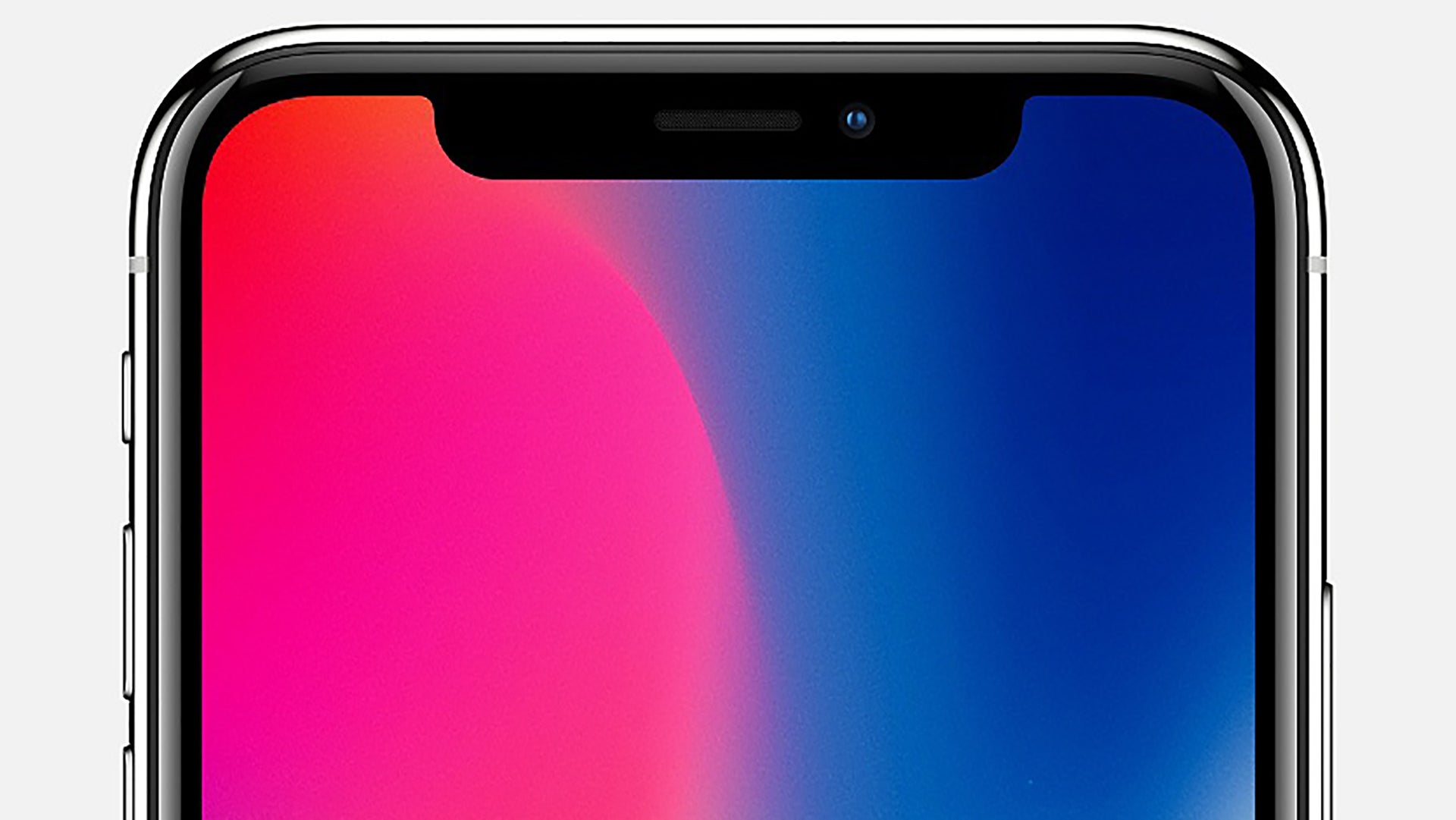
The main change is the Super Retina display, which is a new OLED panel that occupies almost all of the handset’s front. This was achieved by ditching the Home button – and the Touch ID fingerprint scanner, too – from the front of the phone, making it possible to reduce the bezel depth.
In fact, the only real portion of bezel remaining is a small notch towards the top of the phone, which is retained to house components like the camera, and a 3D facial recognition system. This means Apple has been able to offer up a large 5.8-inch display without having a huge phone chassis.
iPhone
Credit: Apple

GOOGLE PIXEL 2 VS IPHONE X SPECS: WHAT’S NEW?

The iPhone X is a seriously powerful phone, which makes sense given its ludicrous £1,000 starting price.
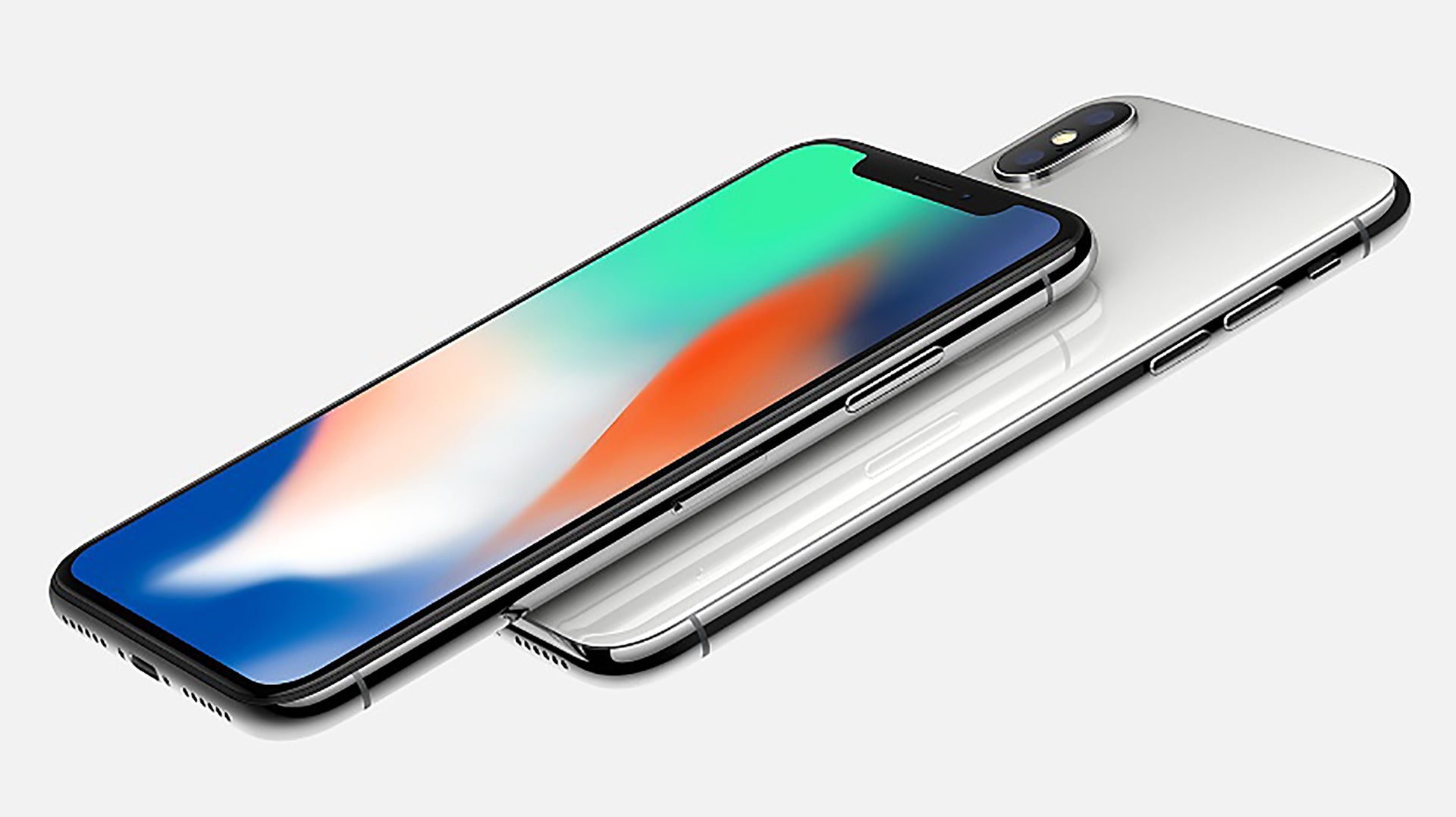
For starters, you get a large, pixel-dense 5.8-inch screen with a display resolution of 1125 x 2436 pixels – that works out at 458ppi.
It’s powered by the supremely nippy A11 Bionic chip, too. That’s a custom-built processor designed by Apple, offering six cores and rapid performance. It’s one of the fastest mobile chips we’ve ever seen, so you certainly won’t be disappointed in how the iPhone X runs.
Other perks include 3GB of RAM, and fairly generous storage options of either 64GB or 256GB.
The other key feature is a dual-camera module on the back, which makes use of a f/1.8 aperture and a f/2.8 aperture for impressive depth-of-field and swanky portrait shots.

Finally, there’s a new facial recognition system called Face ID that supplants the old fingerprint-scanning Touch ID as the main method of user authentication. We’ve yet to test this out though, so we can’t speak to how well it works in the real world – stay tuned.
By comparison, the Google Pixel 2 features a far smaller 4.97-inch display with a lowly Full HD resolution. The phone is cheaper, in fairness, but it still feels a little dinky by 2017’s standards.
iPhone
Credit: Apple
Many users may find the 6-inch AMOLED Google Pixel 2 XL more comfortable, and find visual enjoyment from the very dense QHD-resolution display.
Powering both Google Pixel 2 phones is the Snapdragon 835, a high-performance processor built by US chipmaker Qualcomm. This chipset has already been seen working wonders in the Samsung Galaxy S8, Samsung Galaxy Note 8, and OnePlus 5, so there’s no questioning its capabilities. It’s fast as hell, basically.

Backing up the processor is 4GB of RAM, and storage options of either 64GB or 128GB. Apple may have the edge with its top storage variant, but it’s beaten on RAM – although iOS optimisations mean Apple phones don’t need as much RAM as their Android counterparts.
The final fun perk of the Google Pixel 2 phones is ‘Edge Sense’, a feature carried over from the HTC U11. It basically lets you control certain aspects of the phone by squeezing the sides, and it works surprisingly well. Huzzah!
Google Pixel 2 vs iPhone X Price: Which is better value for money?
When it comes to value for money, it seems Apple is out of luck. The iPhone X is priced ludicrously highly, with models ranging from £999 right up to £1,149 – ouch.
The Google Pixel 2, meanwhile, prices in at a far more modest £599, while the Google Pixel 2 XL is on sale for a slightly loftier £799.
If you absolutely must have the best iPhone, you may be willing to fork out upwards of £1000. But for most users, the Google Pixel 2 will be a much more sensible purchase.

Google Pixel 2 vs iPhone X Summary: What’s the difference?

If you’re in a rush, here’s a quick breakdown of the key differences between the two handsets.
Design: The iPhone X features a swanky all-screen front that’s mimicked by the Google Pixel 2 XL, but the Google Pixel 2 proper is far more prosaic.
Specs: Both Google and Apple have loaded their phones with class-leading specs, so it really comes down to which operating system you prefer.
Price: The Google Pixel 2 starts at £599 while the iPhone X pricing begins at £999. The latter is really only a sensible purchase for Apple die-hards, while most users will get better value for money from the new Google Pixel 2 phones.
Do you prefer the Google Pixel 2 or iPhone X? Let us know via Facebook.

January 4, 2017

8 Tips from Entrepreneurs Who Grew Startups into Successful Businesses

8 Tips from Entrepreneurs Who Grew Startups into Successful Businesses

These eight founders and CEOs have advice for business newbies, so that we can reach success faster and easier than they did.
But why learn all those rough and tumble lessons yourself when others have already blazed the trail for you? A lot of successful CEOs and founders who were once in your shoes are happy to dole out advice, but are you ready to take it?
Let's start off with 5 famous entrepreneurs and then go into 3 up and coming entrepreneurs.
CEO Elon Musk of Tesla, Solar City & Space X

Knowing how to take criticism is vital for Musk. "Take as much feedback from as many people as you can about whatever idea you have...seek critical feedback. Ask them what's wrong. You often have to draw it out in a nuanced way to figure out what's wrong," advises Musk. People don't like to complain or point out faults, but that's what will make your business stronger.
–– ADVERTISEMENT ––
Remember: You don't have to agree with them or necessarily follow their suggestions. But the more feedback you have, the more information you'll have to make the right decisions for your business.
CEO Steve Jobs of Apple

Who would have thought Jobs had such a soft side? He attributes love to being a major driving force with hiring decisions. "When I hire somebody really senior, competence is the ante. They have to be really smart. But the real issue for me is, are they going to fall in love with Apple? Because, if they fall in love with Apple; everything else will take care of itself. They'll want to do what's best for Apple, not what's best for them, what's best for Steve or anybody else."
Your business will always be your baby, no matter how small or big it is. Just like your real baby, you want to hire a nanny that loves your bundle of joy almost as much as you do. That's what fosters a healthy, happy baby (whether it has 10fingers and 10toes or 20 board members).
CEO Steve Ells of Chipotle

"I had a very strong vision for the way Chipotle was going to look and taste," recalls Ells when talking about the history of what's now one of the most well-known "fast food eateries" (sans drive through window). An art history major who went to culinary school after college because of his passion for cooking, he was inspired by the economic model of Chipotle while eating at a small neighborhood taqueria. He used what he learned at culinary school and while working at a restaurant to "really elevate fast food."
The lesson from Ells? Follow your cravings (sometimes literally!), learn first-hand from various viewpoints of your industry, and find a unique way to do something better.
(God, I love Chipotle.)
CEO Richard Branson of Virgin

Branson's all about passion projects and has been since he founded Virgin at just 20 years old. "When I started Virgin from a basement in West London, there was no great plan or strategy. I didn't set out to build a business empire. For me, building a business is all about doing something to be proud of, bringing talented people together and creating something that's going to make a real difference to other people's lives," he tells Business Insider.
Of course, you can't find success on passion alone. However, if you're a huge book lover with a degree in English but have zero experience in search engine optimization (but you hear it's a cash cow!), you likely won't have success in SEO. You have zero passion, zero experience, and a whole lot of competition. You already know what you love--find a way for it to make you money.
CEO Jerry Murrell of Five Guys

"Do you want fries with that?" is a line that got Murrell rich--not a dig at a subpar career path. Murrell didn't find success as an entrepreneur until his four sons were college-aged (but didn't want to go to college!).
Jerry and his four sons became the Five Guys. This is a true family owned business, and well after launch day Murrell still worked at his career in stocks and bonds.
"We figure our best salesman is our customer. Treat that person right, he'll walk out the door and sell for you. From the beginning, I wanted people to know that we put all our money into the food. That's why the decor is so simple--red and white tiles. We don't spend our money on dcor. Or on guys in chicken suits. But we'll go overboard on food."
Quality and passion. Those are the real "secret ingredients" of Five Guys--and they're the perfect foundation for any business.
CEO Josh Manion of Ensighten

How can being a national chess master help you become a successful entrepreneur? For Manion, "Chess was instrumental in establishing the right rigor for the way that you problem solve and approach business and life." This doesn't mean you need to go out and become a chess champion (although it couldn't hurt). However, you can apply that kind of focus and critical thinking skills to your business.
Manion encourages entrepreneurs to wait if they see a good opportunity in case an even better one is around the corner. He reminds entrepreneurs that winning demands you to plot far in advance because every small move counts. Time management is also critical to both chess and business.
CEO Ron Bodkin of Think Big Analytics

"To get good payback on an investment...there needs to be a good strategy, a roadmap, adjusting the course with seven to ten corrections at different stages of the journey. The point is to reduce the cost of going to scale," Bodkin stated. Of course, Bodkin is largely focused on big data (no surprise considering the name of his company), but that approach can be tweaked to suit any entrepreneur's venture.
It's why your business idea should have a business plan as a springboard. It's why being flexible and not sticking to The Plan "no matter what" is critical. Keeping a budget in mind, practicing frugality, and knowing that plans are necessary albeit constantly in transition are all building blocks of success according to Bodkin.
CEO Vincent Mifsud of ScribbleLive

"There are a lot of startups that burn through cash excessively. Yes, you need money to fuel growth, but if your primary strategy is pure spending, you're setting yourself up to fail. Once your team is used to a culture of spending, it's extremely hard to roll back and put accountability in place. Learn from the tech companies that went bankrupt in the late 90s when the capital markets dried up.
"Be laser focused with your investments instead, especially when it comes to marketing - place bets on content, not ads, and use the proper tools to ensure you're making data-driven decisions."
Mifsud is spot on. In today's age of rapid change, you should focus on creating great content that will inspire, inform, and educate your ideal customers. This is what works today. Things change quickly in this space.

These eight entrepreneurs were once standing exactly where you are.

Use their lessons for your own empire, and learn from these great leaders. Perhaps by doing so, you'll struggle a little less, live a little longer and be a whole lot wealthier than you are today.

January 2, 2017

Surface Pro 5 news

Surface Pro 5 news


Surface Pro 5 features

The impressive, if a bit troubled, Surface Pro 4 is nearing its one-year anniversary, so naturally we tech lovers are already thinking about its successor. And with the Surface Pro 4 having sold nearly 10 times more than its younger (but bigger) sibling, the Surface Book, surely Microsoft has a sequel in the works.
In fact, rumors of a Surface Pro 5 release date have been floating around the internet since the current model was launched onto store shelves. The keyword there is "rumors", as none of those reported are citing trustworthy sources, if any at all.
That goes without mentioning folks clamoring across message boards, like Reddit, for their most desired features and improvements. (Can you guess the most popular one? It rhymes with "flattery.")

Cut to the chase

  • What is it? The would-be fifth Surface Pro tablet
  • When is it out? Current rumors point to spring 2017
  • What will it cost? Likely as much as - if not a bit more than - the current Surface Pro 4
Loading pre-order widget...

Surface Pro 5 release date

As reported earlier in 2016, the second major update to Windows 10 was delayed until spring of next year to correspond with a new hardware launch. Purportedly, this lineup would consist of the Surface Pro 5 and Surface Book 2, though a new Surface keyboard appears even more imminent.
Moreover, with Intel's 14-nanometer Kaby Lake processors having just released, it wouldn't be out of character for Redmond to push back the hardware a few months. As the previous Surface Pro 4 and Surface Book encountered technical issues early on, it makes sense for Microsoft to allot itself time with the new CPU architecture.
Regardless of when the Surface Pro 5 finally arrives, you don't need to wait for the next iteration to get your hands on a Surface Pro as Microsoft recently revealed a subscription program that lets you upgrade to new hardware as it's released. Otherwise, you could snag a discounted Surface Book if you act now.
Surface Pro 5
Surface Pro 5

Surface Pro 5 price

In case you haven't noticed in the phone market, the prices of later iterations of modern tech products doesn't change all that drastically - if at all - between releases. Applying that logic to the eventual Surface Pro 5, it's likely that the device will start at $899 (£749, AU$1,349) and escalate from there depending on the configuration and accessories you choose.
Is there any chance that the final price will differ? Of course there is. Would it be smart for Microsoft to deviate too far from the standard it has set? Nope. Regardless, the ball is in Microsoft's court here, and the company will naturally preserve its bottom line if pricier new features are implemented as standard.
Surface Pro 5
Surface Pro 5

Surface Pro 5 stylus

One piece of the puzzle regarding every new Surface is how Microsoft will upgrade its Surface Pen stylus accessory that comes bundled with each tablet. Uncovered earlier this year was a patent filed by Microsoft for a stylus that features a rechargeable battery system.
Specifically, the patent details a magnetic charging dock built to give the new Surface Pen its juice, seemingly with connectors meant for a Surface Dock mounting. Such a venture makes a lot of sense for Microsoft, as the iPad Pro's Apple Pencil currently has this exact edge over the Surface Pen, able to charge by awkwardly connecting to the tablet via its Lightning port.
Surface Pro 5
Surface Pro 5

What we want to see

Look, as much as we've been impressed by the Surface Pro 4, firmware issues aside, there will always be room for improvement. (That would be the case even if it had earned our Editor's Choice award.)
From the screen size and resolution to the hardware inside, we have a few ideas for how Microsoft could craft an even better Windows 10 tablet.

Longer battery life

This is a bit of low-hanging fruit, but countless customers have lamented the Surface Pro 4's battery life - regardless of issues with its "Sleep" mode. We rated the device for 5 hours and 15 minutes of video playback.
That's well below Microsoft's promise of 9 hours of video playback, but we all know that few, if any, laptops actually meet their promised longevity. Our video playback figure is in line with the average laptop, though it's a far cry from what its nemesis, the MacBook Air, can produce.
Ideally, and realistically, we'd like to see at least 7 hours of battery life reliably from the next Surface Pro tablet. That would put it closer in line with the MacBook Air as well as competing tablets, like the iPad Pro.
Surface Pro 5
Surface Pro 5

An even sharper (and/or bigger) screen

With the Surface Pro 4, Microsoft managed to oust countless rivals in both the laptop and tablet spaces when it comes to screen resolution. With a razor-sharp 267 ppi (pixels per inch) already at 2,736 x 1,824 pixels within a 12.3-inch screen, it's not as if the Surface Pro 5 needs to be much sharper.
However, if the next Surface Pro were equipped with, say, a 4K (3,840 pixels wide, at least) screen, that would rip its productivity and entertainment capabilities wide open. Film and photo editors could work at the native resolution that's increasingly becoming the norm, while average Joe's (teehee) could finally watch Netflix in 4K on a tablet.
That said, the realm of super sharp resolutions might be reserved for the Surface Book range at this point. So, why not up its size a bit?
The Surface Pro 4 is big enough for almost all tasks, but it's still not the established default size for most laptops: 13.3 inches. Understandably, the point is for the Surface Pro to straddle both sides of the ever-eroding line between laptop and tablet.
However, maybe the iPad Pro is onto something with its 12.9-inch display. Plus, granted the resolution doesn't bump up too much alongside a size increase, the extra space could allow for a battery life boost.
Surface Pro 5
Surface Pro 5

It might finally be time for USB-C

We saw the latest Google Chromebook Pixel and MacBook be two of the first devices to adopt the latest in USB technology, but now it's the standard among a growing number of smartphones, tablets and laptops. Hell, even the HP Chromebook 13 has two USB-C ports.
The reversible, versatile port may be just what the Surface Pro 5 needs to alleviate the product line's slight input/output problem. A single USB 3.0 port and a proprietary charging port aren't going to cut it for much longer.
It helps that Microsoft has already well-tested the USB-C port within its new Lumia phones, so it's practically a no-brainer to apply that same tech to the Surface line.
If scuttlebutt is to be believed, we're about five months out from a release - plenty of time for the rumor mill to fire up. Stay tuned to this space in the coming months for the latest on things Surface Pro 5.

December 30, 2016

CES 2017: What to expect and when is it?

CES 2017: What to expect and when is it? 
CES logo reflected in a VR headset
The annual Consumer Electronics Show (CES) is the world's largest meeting of technology innovators and enthusiasts. Held in Las Vegas, the consumer conference is awash with robots, smart home appliances, phones and TVs.
At the 2017 conference CES will be celebrating its 50th anniversary. In the past half a century it has gained a reputation as the major tech event of the year, witnessing the announcement of entertainment-changing innovations from the first videocassette recorder in 1970, to camcorder and CD player in 1981, to the Xbox in 2001.
An array of companies from around the world will showcase their latest innovations in keynote speeches, presentations and booths around the city in the first week of the year, setting the agenda for 2017's trends in tech. 
 
Sponsored stories
Welcome to Las Vegas signCES is held annually in Las Vegas, Nevada Credit: Derek Blair. When and where is it? 
CES 2017 officially runs from January 5 to 8 in Las Vegas, United States. However, tradition dictates that many of the larger tech companies in attendance announce their products at CES Unveiled, a preview of trends and innovations that runs from January 3.

What companies will be attending?

The companies that are most likely to be making announcements at CES this year include:
  • Casio
  • BMW
  • Bosch
  • Honor
  • HTC  
  • Huawei
  • Intel
  • Faraday Future
  • LG
  • Lenovo
  • Nissan
  • Nvidia
  • Panasonic
  • Samsung
  • Sony
  • Qualcomm
  • Toyota 
  • Volkswagen
  • Xiaomi
Technology giants Apple and Google notably don't make an appearance at CES, but prefer to hold their own launch events. And while web companies Amazon and Netflix have attended in the past, we're not expecting a big show from them this year.

What will be announced at CES 2017?

Between them we can expect to see a range of new products and concepts, including laptops, smartphones and tablets, as well as the future of the car and completely connected homes.
One of the most exciting announcements will include Faraday Future's concept car, " a premium electric vehicle that combines extreme technology, industry leading range and holistic design". Meanwhile, Sony is expected to announce its first range of OLED TVs and products will be unveiled by Samsung, Nvidia, Bosch and more.
There could also be innovative uses for VR, waterproof and 4K smartphones, and endless drones and smart home gadgets. And there will be no shortage of the weird and wonderful such as home security robots, smart watch straps, and pollution and radiation fighting clothing.


The ups and downs of wireless charging

The ups and downs of wireless charging

The purpose of the Weekend Debate is to look at both sides of the story; to get a true idea about a concept, or two competing concepts and hash it out and see where we all stand about this. We’ve had some really great debates in the past, and I thank you for that. But if I’m going to be really honest with myself, there is one thing that I have not debated. I have taken it for granted that it is great, and maybe that was premature on my part. Wireless charging is a concept that hearkens back to the beginning of my webOS days. I’ve loved it ever since then, but maybe I have been mistaken.
Wireless charging is one of those concepts to me that feels like I’m using “the future.” You set your phone down, and it charges. Easy. Cable charging, despite advancements like USB Type C and Lightning connectors that are reversible, still require two hands to complete. If you come in the house with an arm full of bags, or groceries, or kids, or whatever, you are not going to be plugging in your phone, because you need that arm. Not so with wireless charging. Down. Boom. Charging.


Not just for power

Some wireless chargers also have additional built in functionality. The Qi charger for the Moto 360, and the latest charging stand for the Samsung Gear S2 both serve the dual purpose of charging the watch, and turning it into a clock, perhaps for a bedside table. Sure, that may not be the definitive end to the debate, but it’s still a useful function beyond just putting gas in the tank. Other wireless chargers also serve to prop up a device so it can be useful while charging. Aukey’s Luna charger did much the same thing, along with – yes I’m going to that well again – webOS’s phone and tablet chargers.
Wireless charging also allows for phones to be more water and dust proof because there is no port needed to charge. Yes, there is a port needed for data transfer, but if that has a cover, you’ll be using it less because you charge every day, you don’t necessarily transfer data. So that eliminates wear-and tear on the port cover, and also eliminates the annoyance of having to open the cover every day. So there’s that.

And yet…

But wireless charging isn’t all lollipops and roses is it? I mean really when you stop and think about it, wireless charging can be a touch inconvenient at times as well. For one thing, when you set your phone down to charge, it’s ~down~. You’re not picking that phone up for anything because it will stop charging. Maybe that’s not such a bad thing, but to those of us who like to lounge on the couch with a charging phone, this might be a bit of a deal breaker.
Also consider the accuracy involved with wireless charging. Charging coils need to be aligned with each other in both the charger and the charging device, with some amount of room for error of course. But when the phone is on the charger, it’s there. A careless bump can knock the phone off its charger with no one being the wiser. You know what happens then? You wake up with a dead phone. Ruh-roh.
Like totally
Like totally

Roe vs. Wade…or something

Also, lest we forget there are two different standards out there – Qi and PMA. New chips are making it possible for phones like the Samsung Galaxy S6 series to be compatible with both standards, but still there are two standards. Phones that have come out in the past are not backwards compatible with the other standards, so this is something that is going to be an issue for some time. Plus, as long as carriers like AT&T still get to push around OEM’s we may see scenarios in the future where a phone is capable of accepting either, but is being forced to use one or the other.
Finally, remember that by and large, wireless charging is slower than its wired counterparts. It’s true that some wireless chargers are being advertised as fast-chargers, but how will that measure up against the “50% in 15 minutes” that other wired phones are boasting? Time will tell in this particular argument. But again, this is not one that I believe holds a lot of water, because our phones are meant to recharge while we recharge – over night.

palm touchstone 

Palm had the answer

Now, I don’t want to bang my Palm war drum too much, but it largely solved a couple of those problems by embedding magnets into its chargers and phones. Magnets ensured the phones are aligned properly, and in a pinch a phone could be picked up – charger and all – and used without disrupting the power flow. webOS also built in a Presentation Mode and a number of other features (such as automatic speakerphone while on charger) that negated a lot of naysayers at the time.
But anyway, now that we’ve taken a good look at both sides, where do you stand on the wireless charging fence? Are you a believer in a wire-free phone or do you need your juice so fast, air can’t deliver fast enough? Sound off below in the comments and let’s see if we can figure this out.

December 28, 2016

10 Awesome prototypes that show the future of techonology

10 Awesome prototypes that show the future of techonology

Technology never stands still: it’s always changing, adapting and progressing, and oftentimes things that seemed improbable (or even impossible) one year can quickly start becoming possible only a few short years afterwards. Wearable computers seemed like a fanciful idea only recently, but now they’re pretty much the next big thing to go mainstream. The emergence of the Oculus Rift could probaby catapult virtual and augmented reality into literal reality.

1. Jet Pack International H202

Jet Pack International are making great strides in jetpack technology H202 and H202-Z jetpacks. As the name suggests, both the H202 and H202-Z are hydrogen peroxide-fueled jetpacks that will allow uers to fly at up to 77 miles per hour at a maximum height of 250 feet.
So far thought, the higher-capacity H202-Z is only capable of a maximum flight length of 33 seconds and a maximum travel distance of 3,300 feet.

But you have to admit, it’s a start. The Jet Pack International units have great potential, and the lacking travel time and distance is outweighed by how mobile and controllable the flight is, not to mention how compact the units actually are.
The Jet Pack International H202 and H202-Z are actually currently available, albeit not commercially: you can assemble the jetpack yourself, if you have $100,000 lying around.

2. Aerofex Aero-X

If you’re a Star Wars fan, the Aerofex Aero-X, a real-life equivalent of the Star Wars speeder bike, is definitely something you’ll want to keep your eyes on. The Aero-X is the result of more than 15 years of research and development.
Powered by a water-cooled 240 horsepower engine and two large rotors, the Aero-Xcan hover at an altitude of 12 feet and at speeds of up to 45 miles per hour power. It can also carry up to 310 pounds. Think of the potential.
 
Also, as a result of this extended research and development period, Aerofex claims to have overcome the dangerous coupling effect that can arise due to using two rotors, ensuring that the Aero-X will be safe and easy to control.
The Aero-X is currently available for preorder for a refundable $5000 deposit. The final unit is scheduled to be available in 2017 at the price of $85,000.

3. Prosthetics With A Sense Of Touch

In March 2013, Denis Aabo Sorensen had the privilege of testing a new type of prosthetic hand, created by a group of European engineers and scientists. Unlike conventional prosthetics, the new prosthetic hand connects directly to the remaining nerves in Denis’ upper arm. This means that the "hand" has a sense of touch and is actually controllable.
Blindfolded tests showed that Denis was indeed able to differentiate between different items such as a bottle, a baseball and a mandarin orange. It also could exert different levels of pressure, allowing Denis to touch, hold or grab something.
 
While this prosthetic hand is indeed a great leap forward, it’s still far from ready for widespread use: the arm required electrodes to be implanted directly into Sorensen, and tests still need to be carried out to determine the durability of these electrodes.
In addition, the hand required a lot of processing power, and was hooked up to a laptop; researchers are working on making the processing computer small enough to be integrated within the implant itself.

4. TALOS "Iron Man suit"

TALOS stands for Tactical Assault Light Operator Suit, a combat suit that the US Army hopes will become a reality within the next four years. The TALOS provides ballistic, shock and fire protection for Special Operations soldiers.
The aim is to provide these soldiers with better, more mobile and more versatile protection than what currently exists. The development of the TALOS suit will be a collaborative effort between universities, government agencies and corporations.
 
While there is yet to be a working prototype, development is proceeding at a rapid pace. The head of the US Special Operations Command, Admiral William McRaven is confident that unpowered prototypes will be ready in June. There is also the goal of testing a complete working prototype in August 2018.
Don’t expect to be able to buy this, of course, although there’s every chance that some of the tech here could eventually trickle down to civilian uses.

5. Titan Arm

The Titan Arm is the work of a team from the University of Pennsylvania, and is a strength-enhancing upper-body exoskeleton that will help you lift an extra 40 pounds. Granted, it’s a far cry from the Powerloader we see – and love – in the Alien films but the Titan Arm was designed with a more humble goal in mind.
The Titan Arm is built to help rehabilitate people who’ve suffered serious arm injuries or strokes as well as provide some extra strength and protection for anyone who lifts heavy objects for a living.
 
To keep costs low, the Titan Arm uses 3D printing techniques allowing the prototype development costing to be reduced to £1200. This, and the fact that the developers gained extra funding by winning the 2013 James Dyson Award, means that the Titan Arm may just become a commonplace sight in the near future.

6. Super Maglev Train

Chinese researchers have recently been looking into the next phase of train transportation, beyond even Maglev technology. China and Japan already have very fast Maglev trains that are capable of reaching over 260 miles per hour, but the new next-generation Maglev technology, dubbed super Maglev, will apparently be even faster.
 
Super Maglev is built on the same Maglev technology, but it encapsulates the train in a vacuum tube, further reducing air resistance, allowing for higher, mind-boggling speeds. Researchers claim that such enclosed-tube Maglev systems could see trains reaching speeds of up to 1800 miles per hour.
Of course, there are doubts about the feasability of constructing long vacuum tubes and keeping them pressurised, but if scientists and engineers can figure that out, we may one day be able to cross large distances quicker and more safer than we’ve ever imagined possible.

7. Cave2

Cave2 is a hybrid reality environment that lets artists, scientists and engineers become fully immersed in their research. The Cave2 is a 360° wraparound structure consisting of 72 LCD panels, a 20-speaker surround sound system and a 10-camera optical motion tracking system.
With 3D glasses, scientists and engineers will actually be able to virtually experience and move through anything of their choosing, whether it’s the human body or planets in the solar system. The Cave2 holds an immense amount of potential, especially for situations involving large amounts of data requiring visualization.
 
In fact, a recent project fed crime data from the city of Chicago into Cave2, allowing policymakers and investigators to virtually fly through Chicago, accompanied by real-time crime data and information.

8. 3D Printed Food

3D printing has taken the world by storm, and slowly but surely people are being won over by the idea that it’s for more than just gadgets. Food is also something that can be feasily 3D printed.
German company, Biozoon, is harnessing the power of 3D printing to create seneoPro, a range of 3D-printable powder mixtures that solidifies when printed but also very quickly melts when eaten. The main target for this new 3D-printable food are elderly patients who suffer from dysphagia, or the inability to swallow.
 
Such a technology would definitely reduce the risk of choking, and the 3D-printed nature of seneoPro means that caregivers and family members can very easily mix and match the powders to create all types of dishes. And you can also add coloring agents and texturizers to make the food even more appealing.
 

9. High Power Wireless Charging

Wireless charging, up until now, usually means charging via a pad, rather than via wires and cables. But if you ask the team from the Korea Advanced Institute of Science and Technology wireless charging can also be done a distance away.
The team recently demonstrated a prototype of a new Dipole Coil Resonant System (DCRS) that can wirelessly power devices up to 15 feet away. The DCRS system achieves this using a magnetic field, and is apparently powerful enough to charge up to 40 mobile phones, and can even power larger devices, like a TV.
 
There’s no word yet on how soon we’ll be seeing this technology in the real world, but in the mean time you can check out Cota, a somewhat similar wireless charging technology that’s coming soon.

10. StoreDot Fast Charging Battery

StoreDot, a ground-breaking nanotechnology company, recently unveiled a prototype for a next-generation battery that harnesses all their knowledge of nanotechnology and energy storage technologies. StoreDot uses bio-organic "nanodots" that have increased electrode capacitance and electrolyte performance.
The science is a bit complex, but the outcome is simple: as a result of these nanodots, the battery can be fully charged in only 30 seconds.
 
The best thing is that, since StoreDot’s nanodots are bio-organic, they’re a lot more environmentally friendly, not to mention power-efficient, than a lot of other competing nanodot technologies which often use dangerous metals and chemicals. They’re also apparently cheap to manufacture, so who knows, we may be seeing super-fast batteries in our smartphones before too long.

Bonus: “Back To The Future” Hoverboard

Yeah, we know, it was a hoax, but for a brief, glorious moment, it seemed like all ourBack to the Future-fueled dreams were coming true: an actual working hoverboard that wasn’t just a scientific experiment constrained to a laboratory. The promo video, from a company named HUVr and featuring famous faces like Tony Hawk and Dr. Emmet Brown himself doing everything from just riding around to catching footballs and even controlling the hoverboard with an iPhone.
 
As it turned out only a day later, the video and the entire hoverboard was a hoax by Funny or Die, but the fact that it captured the imagination of so many people shows that, yes, people really do want hoverboards. It’s safe to say that if reserachers ever do figure it out, it’ll be an achievement that nobody will ever forget.